
Key highlights
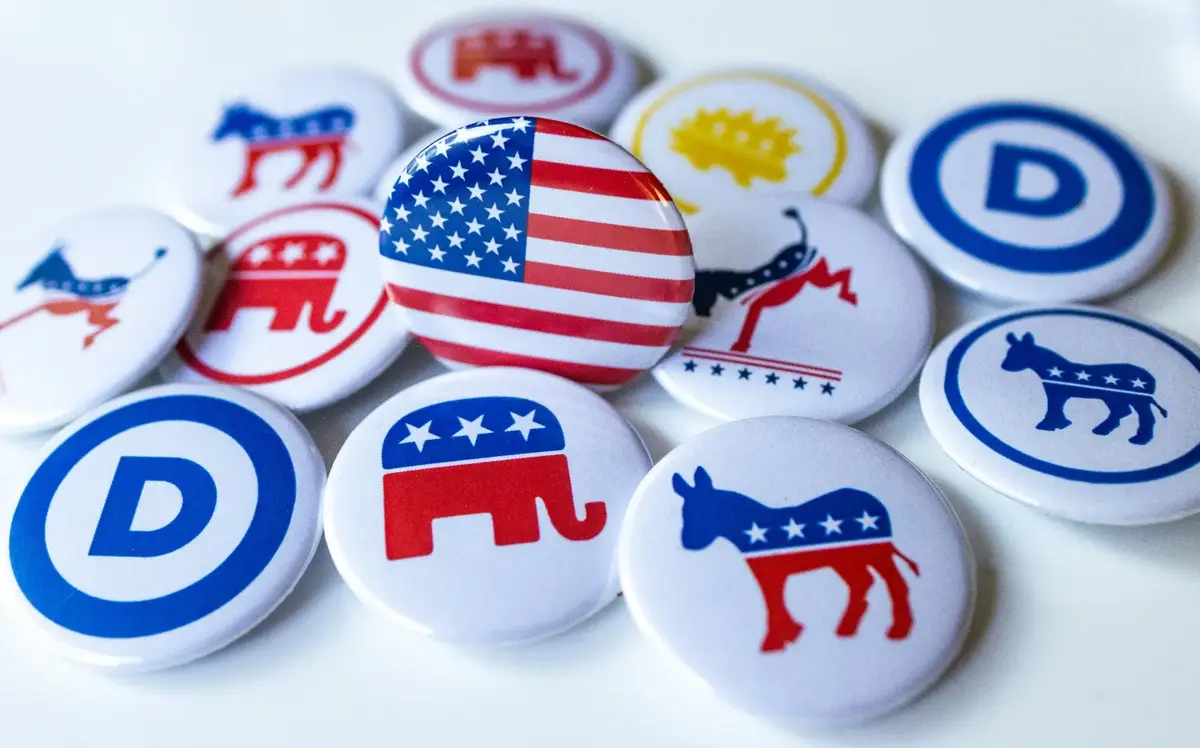
- The 2028 presidential election is scheduled for November 7, 2028. The 22nd Amendment bars President Trump from a third term, so 2028 is the first open-seat contest since 2016, with competitive primaries expected in both parties.
- The November 2026 midterms are the single largest catalyst for the 2028 field, delivering the first nationwide electoral test of candidate viability since 2024 and resetting who counts as a frontrunner in each party.
- Polymarket and Kalshi price the race across four dimensions: which party wins the White House, the Democratic nomination, the Republican nomination, and individual general election odds for candidates like Gavin Newsom and J.D. Vance.
What will move the 2028 odds.
- Whether Vice President Vance's institutional advantages translate into a durable primary campaign, or whether challengers like Secretary of State Rubio, Senator Cruz, or Governor DeSantis find a viable lane
- How the wide Democratic field consolidates when governors and senators compete alongside a former vice president for overlapping donor and activist networks
- Which candidates have actually declared. Most contracts still price undeclared names: Wes Moore still carries a live Democratic-nominee contract on Polymarket despite publicly ruling out a 2028 run and winning the June 2026 Maryland gubernatorial primary for reelection
- November 2026 midterm results, the first nationwide test of candidate viability and party messaging since 2024
- A potential Trump endorsement before or after the midterms, a decision that could freeze the Republican field or fracture it
- The DNC's pending decision on its 2028 primary calendar, which could reshape the early-state sequence that has historically winnowed crowded fields
How prediction markets price the 2028 race.
Balance of power: Each contract pays $1 if its outcome happens and nothing if it does not, so a price in cents reads directly as the market's probability. On the party question, the Democratic side trades in the high 50s in cents on both Polymarket and Kalshi as of July 2026, with the Republican side in the low 40s. Kalshi also lists a combined contract pricing the presidency alongside House and Senate control; the contract covering a full Democratic sweep (House, Senate, and presidency) trades just under 50 cents, so the market treats a Democratic White House and a Democratic Congress as closely linked outcomes.
Party nominations: Both Polymarket and Kalshi carry full candidate fields for the Democratic primary and the Republican nomination, with every serious contender holding an individual contract. The Democratic field is led by Gavin Newsom; the Republican field is led by J.D. Vance, with Marco Rubio the most-watched challenger. Primary debates and early-state results will drive the sharpest price moves in these markets.
Individual winner markets: Kalshi hosts person-level contracts for the general election, so a specific candidate can be priced as the next president independent of the nomination markets. The comparison is the useful read: as of July 2026, J.D. Vance trades around 40 cents to win the Republican nomination but under 20 cents to win the presidency. That gap is the market separating primary strength from general-election strength.
Catalysts and calendar: The November 2026 midterms are the dominant near-term repricing event; their results will reset which 2028 names the markets treat as viable. Candidate declarations expected in late 2026, first primary debates likely in mid-2027, and Iowa caucuses projected for late January 2028 mark the next sequence of high-volatility triggers.
All related markets.
events · markets
Founder & CEO
Former gaming executive, multiple-time founder, and public and private market investor. Brings the operator perspective most sites can't: why platforms make the decisions they do, and what that means for you.
More news
More in Politics.
2026 Midterm Election Odds: House and Senate Markets
House and Senate control, individual battleground races, and seat count prediction market odds on Polymarket and Kalshi.

Trump Presidency Tracker 2026: Approval & Impeachment Odds
Live Kalshi and Polymarket odds on Trump's second term: how low approval goes, whether impeachment happens, who leaves the Cabinet, the pardon ladder, and the Greenland and 51st-state markets.

Supreme Court Predictions 2026-2027: Next Justice & Rulings
Track the ladder for the next Supreme Court justice, the retirement-watch contracts on Samuel Alito, and the pending cert petitions on sports event contracts, tariffs, and gun rights, priced live on Polymarket and Kalshi.
Explainers
Politics explainers.

The Complete Guide to Political Prediction Markets in 2026
Learn how political prediction market contracts work, where to trade, and where the real edge is.