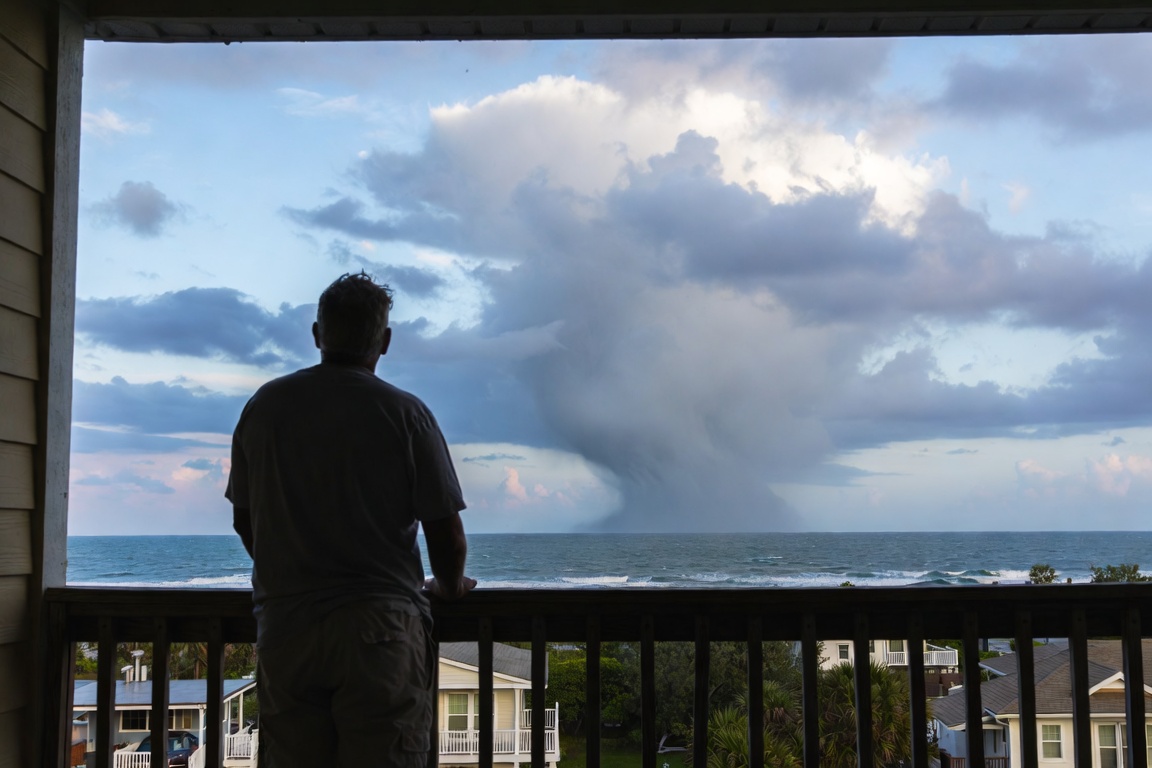
Climate prediction markets are contracts that let you take a position on a future weather or climate outcome, with the price moving to reflect the live probability of that outcome happening. They cover far more than the next day’s temperature. The same weather markets that price how hot a city gets also let you trade a severe Atlantic hurricane season, a month of heavy rain or snow, a major earthquake, how far Arctic sea ice retreats, and whether a given year ranks among the hottest on record.
Almost all of the volume, though, sits in one corner: roughly 95% of weather-market volume tracked internally is short-term daily city-temperature contracts. The longer-horizon contracts that actually price risk, seasonal hurricane-season markets, full-year heat-record markets, and monthly rain and snow markets, trade only a fraction as much.
Those untapped, longer-horizon contracts are the ones with real-world use. A contract on a destructive hurricane season, a snowless winter, or a record-hot summer doesn’t just let someone speculate on the weather; it lets an ordinary person hedge against it, the way utilities, insurers, farmers, and energy firms have priced weather risk for decades.
How big are climate prediction markets on Kalshi and Polymarket?
Weather is a small category inside a much larger boom. Combined monthly volume on Kalshi and Polymarket climbed from under $5 billion in September 2025 to roughly $24 billion by April 2026, with lifetime volume past $150 billion.1Pew Research Center, “Trading volume on prediction markets has soared in recent months,” pewresearch.org, May 2026 Sports drives most of that activity, around 80% of Kalshi’s volume and roughly 39% of Polymarket’s, leaving climate prediction markets in a modest corner of each book. The two platforms sit close in overall size, with Kalshi the larger by total volume; Polymarket runs globally while Kalshi operates as a US-regulated exchange under the CFTC.2Pew Research Center, “Trading volume on prediction markets has soared in recent months,” pewresearch.org, May 2026
That corner turns over fast. Only a few hundred weather markets are live at any moment, on the order of a couple hundred on Polymarket and a few hundred on Kalshi, based on internal data as of mid-2026. Daily-temperature contracts open and expire every day, so the set you can trade today is not the set you could trade last week.
What you can trade: temperature, hurricane, and seasonal markets
Weather markets split into two horizons. Short-term daily contracts settle in a day or two and ask a narrow question, like whether a city’s high clears a given temperature. Longer seasonal and yearly contracts price risk months out, covering hurricanes, snowfall totals, and where a full year will land in the temperature record.
The daily contracts span a growing list of cities across six continents, from Miami to São Paulo to Tokyo, so a trader can take a position on tomorrow’s high where they actually live. The longer-horizon contracts are fewer and broader, and they are the ones that map onto real exposure: a heavy-snow winter, an active hurricane season, a record-hot year. That second horizon is where weather markets start to resemble the tools utilities and insurers already use to manage weather risk.
Why most volume is daily temperature speculation
Around 95% of weather-market volume sits in short-term daily city-temperature contracts, and the skew runs similarly high on both platforms, by the same internal analysis. These markets resolve fast and hand traders a fresh question every day, which is what short-horizon speculation rewards. Most weather contracts trade modestly, from a few thousand up to a few hundred thousand dollars, so the longer-horizon contracts barely register against the daily churn.
Even the standout numbers came from the near-term side. The single biggest weather contract to date was a January 2026 NYC snowstorm market on Kalshi, a short-term event that traded to around $6 million.3Insurance Journal, “Weather Prediction Markets Are Booming, but Can They Improve Forecasts?,” insurancejournal.com, April 2026 A Polymarket market on where 2026 will rank in the temperature record, a genuinely longer-horizon question, drew only on the order of a few million dollars.4The Philadelphia Inquirer, “Weather gambling has a long history, but online prediction markets raise the stakes,” inquirer.com, May 2026
So the money concentrates where the payoff is fastest, not where the risk actually lives. The contracts that could let an ordinary person hedge a real weather exposure, a heavy winter, a hurricane season, a hot summer, sit mostly untouched.
How do climate prediction markets work?
A climate prediction market is a contract on a future weather outcome that pays out if you call it right: binary yes/no questions, like whether a hurricane makes US landfall this season, or multiple-choice ranges, like tomorrow’s high in a city.
Buying yes or no, and what the price means
The price is the odds, written in cents; a contract at 40 cents reads as a 40% chance, pays $1 if it happens, and nothing if it doesn’t. You’re trading against other people, not the platform; neither Kalshi nor Polymarket runs a house edge, which is the real difference from a sportsbook.5Kalshi, “How does Kalshi make money?,” help.kalshi.com, 2026 You also don’t have to wait for the weather to play out: if your contract climbs from 40 cents to 60 as the forecast firms up, you can sell to lock the gain.
How weather markets settle (NWS and NOAA data)
Every weather market names its settlement source in its rules, set before you trade. Kalshi settles on the official government agency for the event, like the National Weather Service for temperature, so there’s nothing left to interpret.6Kalshi, “Weather Markets,” help.kalshi.com, 2026 Polymarket’s source is whatever the rules name, finalized through an outside oracle; it might be a NOAA dataset or a single weather station.7Polymarket, “Resolution,” docs.polymarket.com, 2026
That last setup is the fragile one. Polymarket’s Paris market had long resolved on a single airport sensor; in April 2026 that sensor’s reading spiked anomalously, a trader who bet on the spike won tens of thousands, and French authorities opened a manipulation investigation.8Euronews, “Hair dryer trick behind €25,000 win? France probes potential weather data scam linked to Polymarket,” euronews.com, April 2026 Polymarket later switched the source to a different sensor, with no refunds on the settled bets.
A weather market is only as dependable as the source behind it; the ones built on official feeds that can’t be quietly gamed are the ones you could lean on to manage real risk, not just bet on.
Get alerts on Weather markets. Set it up free in 30 seconds.
Are climate prediction markets gambling?
Legally, no: climate prediction markets in the US are regulated as financial markets, not gambling. In practice, most of the traders treat them like gambling anyway, concentrated in short-term bets on a city’s daily high or low.
Kalshi operates as a CFTC-regulated exchange, and its event contracts are regulated like commodities, not wagers.9Fortune, “Prediction Markets Have Made Betting Easier Than Ever,” fortune.com, April 2026 Polymarket is split: its main international platform sits outside CFTC oversight, while its newer US platform sits inside it.10Pew Research Center, “Trading volume on prediction markets has soared in recent months,” pewresearch.org, May 2026 Kalshi also argues the structure separates it from gambling outright; its spokesperson says the model “doesn’t incentivize people to lose more,” since you trade with other traders and the platform earns its fee whether you win or lose.11Fortune, “Prediction Markets Have Made Betting Easier Than Ever,” fortune.com, April 2026
So the gambling label comes down to use. Buying a contract on tomorrow’s high because you want action is speculation. Buying the same contract because that outcome may affect your life or your business is a financial hedge: a newer instrument doing the job insurance has always done, paying out when the loss arrives.
Hedging weather risk: the overlooked use of these markets
The most useful thing you can do with a weather market is hedge a weather risk you already carry, and almost nobody does it. You carry that risk whether or not you ever trade: a brutal heat wave lands on your electric bill, a snowless January empties a ski town’s winter, and an active hurricane or fire season can leave property damage that insurance only partly covers. Yet nearly all the volume in climate prediction markets chases short-term speculation on daily temperatures, while the longer-horizon contracts that map onto real weather risk stay barely used.
What hedging is, in plain terms
A hedge is a position that pays you when something that costs you money happens, so the gain offsets the loss. If an August heat wave means a painful electric bill, a contract that pays out when the month runs hot pays you back part of that bill. If your winter income depends on snow, a position that pays when snowfall comes in low cushions a season you would otherwise just absorb.
Hedging works like insurance: you pay a small amount up front, and you get paid when the bad outcome happens. The differences are what make it useful here. No insurer sells a policy against a hot month raising your electric bill, and there is no claims process; the contract pays out on the official weather number, whether or not you can prove the weather cost you anything.
How businesses have hedged the weather for 30 years
Businesses have always carried weather risk, but contracts that pay out on the weather itself only emerged in the 1990s. In one of the earliest deals, Consolidated Edison, New York’s power utility, agreed to buy its August electricity from Aquila Energy with a weather clause built into the contract: if the month ran cooler than normal, measured in cooling degree days (a standard measure of air-conditioning demand) at the Central Park weather station, Aquila owed ConEd a discount on the power.12Wikipedia, “Weather derivative,” en.wikipedia.org, 2026 The logic was simple. A cool August means New Yorkers run less air conditioning and ConEd sells less electricity, so the discount paid the company back for the sales the weather took away.
In 1999, the Chicago Mercantile Exchange listed the first exchange-traded weather futures, moving the idea from one-off private deals to a public market.13Wikipedia, “Weather derivative,” en.wikipedia.org, 2026 The practice kept growing: the market for transferring climate risk is now estimated at well over $25 billion, per Stephen Doherty, founder of Speedwell Climate.14Artemis, “Weather and climate derivatives market forecast to keep growing: CME,” artemis.bm, September 2024 Today, renewable-energy firms like Norway’s Statkraft hedge because their output moves with the weather, and Star Group, a US home-heating company, buys protection that pays out when a warm winter cuts demand for heating fuel.15Artemis, “Star Group lifts weather derivative protection slightly for 2025,” artemis.bm, August 2024
For 30 years these tools were written for utilities and trading desks, in contract sizes no household could touch. Weather prediction markets put the same idea, a payout tied to a measured weather outcome, in anyone’s hands for a few dollars a contract. What’s left is matching one to the weather risk you actually carry.
How to use weather prediction markets to hedge everyday costs
To hedge an everyday cost with weather prediction markets, name a weather outcome that would cost you money, find a contract that pays out when it happens, and size the position so the payout roughly offsets the cost. That is the whole recipe; the work is in the matching. The daily temperature contracts that dominate weather market volume settle within a day or two, far too fast to hedge anything a household budget cares about. The longer seasonal and yearly contracts are the hedging tools.
Example: hedging hurricane season for a Florida homeowner
A Florida homeowner’s hurricane season exposure starts with the deductible. Florida law requires insurers to offer hurricane deductible options of $500, 2%, 5%, or 10% of the policy’s dwelling limits, so a homeowner with a $200,000 dwelling limit and a 2% hurricane deductible pays the first $4,000 of storm damage before insurance pays anything.16Florida Department of Financial Services, “Florida’s Hurricane Deductible,” myfloridacfo.com, 2026 Add plywood, generator fuel, and a possible evacuation, and a bad season costs real money even when the insurer eventually covers the roof.
The hedging tool is live today. Polymarket lists a Category 4 hurricane landfall market: will any Category 4 hurricane make landfall in the US before 2027? As this is written in mid-2026, the yes side trades around 30 cents, and the price moves as forecasts and ocean temperatures update through the season.17Polymarket, “Will any Category 4 hurricane make landfall in the US before 2027?,” polymarket.com, 2026
The arithmetic is illustrative, not a recommendation. Suppose the homeowner puts about $150 into yes contracts at around 30 cents; that buys roughly 500 contracts, paying about $500 if a Category 4 makes US landfall before 2027. That $500 covers the storm prep run, or a slice of the $4,000 deductible. If no Cat 4 lands, the $150 is gone, and it worked the way a premium does: you paid for protection you turned out not to need.
What to consider before trying it
The first thing to weigh is the mismatch: the contract pays on any US Category 4 landfall, not on damage to one house in Florida. A Cat 4 hitting Texas pays the homeowner whose roof is fine, and a Category 3 grinding through their own county pays nothing. This is a blunt instrument, sized to soften a bad season, not to replace insurance.
The markets themselves are also young. Outside the daily temperature contracts, many weather markets are thin: the tailored contract you want (Category 3 or stronger, Gulf Coast only, this season) may not exist yet, or may trade so lightly that getting in and out at a fair price takes patience. Checking a market’s volume before committing is part of the job; the perfect version of this toolbox does not exist yet, which is what being early means. And only commit money you can afford to lose entirely: if the event never happens the stake is gone, exactly like a premium on a claim-free year.
How to find and act on weather markets to hedge risk
Hedging with weather markets comes down to three steps: find the markets tied to the weather that costs you money, pick a contract with enough trading activity and the right time frame, and buy at a price that makes the protection worth it. Each step takes a few minutes with the right tools.
Find the weather markets that fit the risk you carry
Start with the risk, not the market list: a hurricane deductible, a winter heating bill, a season that depends on snow. Then look at every market tied to that outcome. The market scanner on Inside Predictions shows every live market from Kalshi and Polymarket on one screen; filter to the climate and weather category, or search a term like “hurricane,” and the full menu is in front of you. The platform filter matters too: Kalshi and Polymarket each list different contracts, and where you live affects which platform you can use, so narrow to the one available to you.
New contracts also open constantly, and the one that fits your risk may not exist the day you first look. With a free account, discovery handles that: save the kinds markets you care about once, and matching contracts, including newly listed ones, show up on their own in a Discovered list on the My Markets page.
Pick a contract with enough volume and the right time frame
For hedging, the first thing to narrow is time. Set the expiry filter to show only markets that end months from now; that removes the daily temperature contracts and leaves the seasonal and yearly ones that can cover a season-long risk. Markets with less than $1,000 in trading are already screened out automatically, and the volume filter lets you raise that bar further, so what’s left has enough buyers and sellers to give you a fair price when you buy or later sell. Sort by expiry, volume, or the biggest recent price moves, and a few hundred live weather markets become a handful worth reading closely.
Set an alert and buy at the right price
The contract’s price is the cost of each dollar of protection. At around 30 cents, $500 of hurricane payout costs about $150; if the price climbs to 60 cents, the same protection costs twice as much, and the hedge may stop being worth it. So decide the most you’ll pay for each dollar of protection, follow the contract, and set an alert on price movement. When the market starts moving toward your number, the notification comes to you, instead of you watching a screen all hurricane season.
The trade itself happens on Kalshi or Polymarket; the alert tells you when it’s time to look. Signing up is free, no card required. The tools exist, the markets exist, and the hedging use is sitting there waiting.