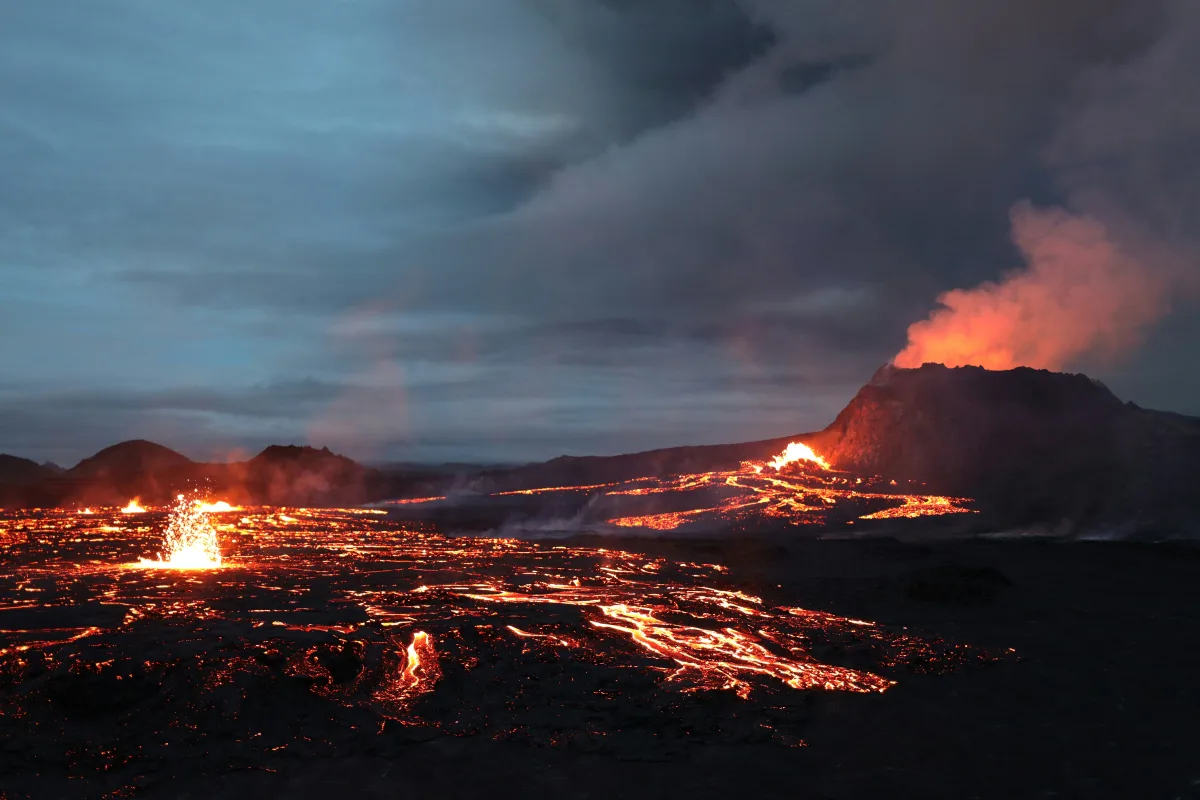
2026 earthquake and volcano predictions: counts, megaquakes, and eruptions
Updated just now
Key highlights
- Worldwide, a normal year brings about 15 earthquakes of magnitude 7.0 or higher plus one of magnitude 8.0 or greater (USGS). Through mid-July 2026, USGS had logged 9 magnitude 7.0 or higher events, a pace near the recent yearly average.
- The strongest earthquake ever recorded was magnitude 9.5, in Chile in 1960 (USGS). USGS also states that a magnitude 10.0 is not physically possible, because no fault is long enough to produce one. A Polymarket contract on a 10.0 before 2027 still holds the single largest pool on this page.
- Large eruptions are rarer than the news cycle suggests. A VEI 4 eruption, a 4 on the 0 to 8 Volcanic Explosivity Index and the size these markets track, happens on average about once every 18 months (Smithsonian Global Volcanism Program). Check that average against the live prices in the eruption-count markets below and judge which side the evidence supports.
Earthquakes and volcanic eruptions are among the hardest events in nature to forecast. Scientists can map where the risk is high and estimate the chance over decades, but no one can reliably say a large quake or eruption will strike on a given day. That gap, between long-run risk and short-term certainty, is exactly what prediction markets try to price. On Polymarket and Kalshi, traders put money on how many magnitude 7.0 earthquakes the world will record this year, whether a magnitude 8.0 will hit California or Japan, and how many large volcanic eruptions will be confirmed in 2026.
This page tracks those markets live and sets each price against what the science actually says. Some markets line up closely with the historical record. Others, like a magnitude 10.0 earthquake that USGS calls physically impossible, price a risk the geology does not support. Both cases are useful: the first shows a market doing its job, the second shows where fear or thin trading pulls a price away from the evidence.
What the science says about predicting earthquakes and eruptions
- Earthquakes follow no schedule. USGS records about 15 magnitude 7.0 earthquakes and one magnitude 8.0 or greater in a typical year, but the yearly count has swung from 7 to 19 over the past decade, so annual-count markets are dominated by natural variance, not a trend
- Magnitude has a ceiling. The largest quake ever measured was magnitude 9.5, and USGS says a 10.0 cannot happen because no fault is long enough, which makes a 10.0 market a bet against physics
- Big eruptions are rare and graded after the fact. The Volcanic Explosivity Index runs 0 to 8; a VEI 4 recurs on average about every 18 months, and a VEI 6 like Pinatubo in 1991 comes once in decades
- The official numbers are revised. USGS publishes a fast preliminary magnitude that can move up or down as data arrive, and the Smithsonian confirms an eruption's VEI only after it ends, so these markets settle on reviewed figures, not first headlines
- Location decides the damage. A magnitude 8.0 under open ocean and the same quake under a city are worlds apart, which is why the California, Japan, and Los Angeles markets draw separate interest from the worldwide counts
How prediction markets price earthquake and volcano risk
Where you can trade these: The two platforms are not equally open. Kalshi is a US-regulated exchange, and on this page it carries the California and Japan quake markets, the eruption-count contracts (at least one, two, or three large eruptions in 2026), and the supervolcano contract. Polymarket does not accept US persons, and it hosts the flagship market counting the year's magnitude 7.0 or higher earthquakes, both megaquake markets, the Los Angeles market, and the market on how many large eruptions 2026 brings. A US reader can follow every market here, but can only place a trade on the Kalshi side, so check your own eligibility on each platform before funding anything.
Yearly earthquake counts: Polymarket runs a market on how many magnitude 7.0 or higher earthquakes the world will record in 2026, split into ranges: 8 to 10, 11 to 13, and so on up to 20 or more. Read together, the ranges show where traders think the year's total will land, which you can compare with the long-run USGS average of about 15.
The megaquake tail: Two Polymarket markets price the rare high end: a magnitude 9.0 and a magnitude 10.0 before 2027. Only four or five magnitude 9.0 quakes have been recorded since 1900, and a 10.0 has never happened and, per USGS, cannot. These are the clearest test of whether a price tracks the science.
Regional risk: Kalshi prices a magnitude 8.0 in California across three deadlines, 2027, 2028, and 2035, and a magnitude 8.0 in Japan before 2030, while Polymarket carries a magnitude 6.5 near Los Angeles. These prices sit well above what the long-run science supports. For California, the USGS 30-year model puts a magnitude 8.0 at roughly 7 percent, low single digits over these contract windows, and the markets price it noticeably higher. Decide what explains that gap before reading these prices as forecasts.
Volcanic activity: Both platforms price how active 2026 will be underground: how many VEI 4 eruptions the world will confirm, whether a VEI 6 occurs, and whether a supervolcano erupts before 2050. The supervolcano market is a bet on an event that has not happened in tens of thousands of years.
Science against the market: Geologists publish hazard estimates over 30-year windows; the markets reprice continuously as each quake and eruption is logged. Side by side, the two show where the crowd agrees with the science and where it does not.
What to watch, and what cannot be watched: Earthquakes give no usable warning: USGS states that neither it nor any other scientists have ever predicted a major earthquake, so there is no feed that tips the count markets in advance. Volcanoes are the opposite. They are monitored, and the monitoring is published. USGS runs a ground alert level of NORMAL, ADVISORY, WATCH, or WARNING alongside an aviation color code of GREEN, YELLOW, ORANGE, or RED, and moves them as unrest builds. Those levels are the thing to check: the eruption markets settle on confirmed eruptions, and a rising alert level is the published signal of unrest that arrives first.
Why this page tracks insurance stocks: When one of these quakes or eruptions hits, the loss lands on insurers and reinsurers, which is what the stock prices in the key indicators strip track. Everest and RenaissanceRe reinsure catastrophe risk worldwide, across the same Japan and global events these markets price; Palomar sells earthquake cover directly, mostly in California, where standard home policies leave it out. A homeowner buying that cover is making the same bet as a YES contract on a big quake, priced in a different market. The stocks sit on the other side: a major event means claims paid out, so it is bad news for these tickers.
The honest limits: These are thin markets. As of mid-July 2026, the Los Angeles contract had only about a thousand dollars of standing buy and sell orders behind it, so a serious position would move the price before it filled, and no homeowner is hedging a house here. Settlement can lag by months: the Kalshi eruption count for 2026 does not settle until June 2027, because the Smithsonian rates an eruption only after it ends. These contracts also pay on a measured number, not on damage. A magnitude 7.9 in California would be devastating, and every magnitude 8.0 California contract on this page would still settle NO. Insurance regulators make the same point about policies that pay out on a measured trigger: real losses can occur without the trigger number being hit.
Earthquake and volcano prediction markets
events · markets · Updated just now
Founder & CMO
Legal training meets poker bankroll management. 10 years of content marketing scaled to millions of pageviews. Runs the editorial side, turning platform research and live market data into the answers traders actually search for.
More news
More in Climate & Weather.
2026 Heat & Temperature Predictions: Hottest Year, Heat Domes & CO2
Live market prices on 2026 heat and temperature records: the hottest year, daily city highs, heat domes, Arctic sea ice, and atmospheric CO2, set against NASA, NOAA, and NSIDC data.
Pandemic Odds 2026: Bird Flu, Measles, and Ebola Predictions
A large Ebola outbreak is a declared emergency that WHO says is not a pandemic. See how a pandemic actually gets declared, the record since 2000, and the live markets pricing bird flu, measles, and Ebola.
2026 US Tornado & Severe Weather Season Prediction Markets
Live 2026 US tornado and severe weather season markets: annual and monthly tornado counts, peak wind, and storm-belt rain across Polymarket and Kalshi.
Explainers
Climate & Weather explainers.
Using Climate Prediction Markets to Hedge Weather Risk
Climate prediction markets let you trade and hedge weather outcomes and manage real weather risk.